|
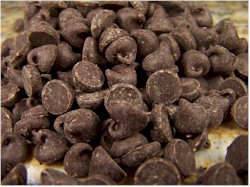
Chocolate chips are small
rounds (1/8 to 1/2 inch) (.6 to 1.25 cm) of semi-sweet, dark, milk or white chocolate
that contain less cocoa butter than other chocolates. They are made to
withstand moderate oven heat so they retain their texture and shape in cookies,
muffins, and other baked desserts without appearing to melt (even though
the cocoa butter has melted). It is not a good idea to use chocolate chips
in recipes than call for melted chocolate as the chocolate chips when melted
become chocolate that is thick, muddy and grainy that is very difficult to
use. This is because of the smaller amount of cocoa butter (25-30%) in the
chocolate chips.
Some brands use vegetable
fat as an ingredient.
Primarily used in the
making of cookies and brownies.
Note: It is often
asked "Why do chocolate chips not melt in the oven?". The answer is that
they do, in fact, melt. It is just that chocolate chips retain their shape
when melted. If you break apart a hot chocolate chip cookie, you will see
that the chocolate chip has melted.
Trivia:
Ruth Wakefield is credited with inventing the first chocolate chip cookie.
In 1930 at the Toll House Inn in Massachusetts she decided to cut up chunks of Nestles Semisweet Yellow Label Chocolate bar and add them to a rich butter
cookie dough. The Nestle company discovered her delicious cookie and made
a deal for the rights to her recipe. Subsequently by 1939 Nestle had
invented chocolate morsels (first chocolate chip) and packaged them in a Yellow
Label bag and, upon buying the Toll House name, printed Ruth Wakefield's recipe
for "The Famous Toll House Cookie" on the back. |