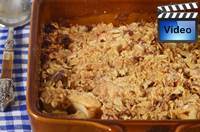
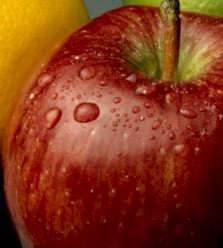
An apple
crisp is perfect when the weather turns cold. There is something so
appealing about warm baked apples covered in cinnamon and sugar,
made all the more tasty with a crisp and crunchy topping.
more
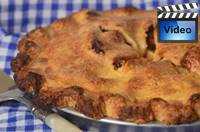
The Apple Pie, with its
two rounds of pastry enclosing slices of cinnamon sugared apples, is
a favorite dessert in North America. more
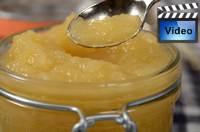
Homemade Applesauce can
easily be made at home. All you need is some tasty apples. Great as
a snack or as a side to pork and other meat dishes.
more
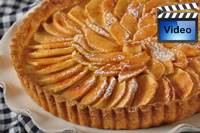
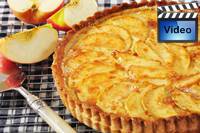
This beautiful tart has
a crisp cookie-like sweet pastry crust that is filled with slices of
apple enveloped in a rich and creamy custard.
more
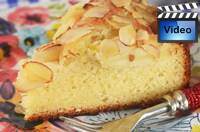
The almond filling
(Frangipane) is a pastry cream made with almond paste that has a
delicious almond flavor. more
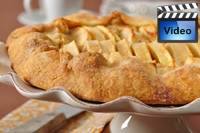
Galette is a French term for
a flat round cake that dates from ancient times when cereal pastes were
cooked on hot stones. Galettes can be sweet or savory and different
types of pastries and fillings can be used.
more
This is one dessert that I
recommend eating shortly after it is baked; when the crust is at its
best, beautifully crisp and crumbly, the filling is soft and creamy, and
the apples are juicy and flavorful. more
This Apple Scone Cake has
two layers of dough with cinnamon and sugar laced chunks of apples in
between. more
An Apple Cake is the
perfect Fall dessert, with its chunks of apples and pecans, along with
plump and juicy raisins, all wrapped in a cinnamon-laced batter.
more
Pomegranate Jelly is a
beautiful two layered dessert that pairs a translucent, gold colored
apple jelly with a shimmering, garnet colored pomegranate jelly.
more
Apples originated in Western
Asia but are now grown in temperate climates throughout the world where
there are warm days and cool nights. The different varieties of apples
range in the thousands with each having its own unique color, shape,
texture and flavor. more
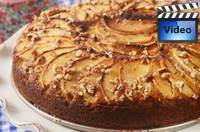
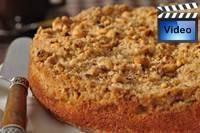
This Apple Streusel Cake
is a delicious combination of butter cake, sliced apples, and a
cinnamon flavored streusel. more
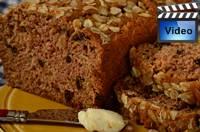
When you add applesauce,
preferably homemade, to this Applesauce Bread it gives it a
wonderfully moist texture and a delicious apple flavor.
more
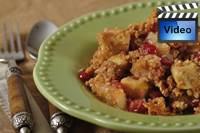
The
delicious combination of sweet pears, tart cranberries, and crisp
apples, along with a crumble topping, make for a perfect Fall
dessert. more
Popovers
are a wonderfully light and tasty quick bread that uses a batter
quite similar to those used for Yorkshire Pudding, Dutch Babies, and
Pancakes. more
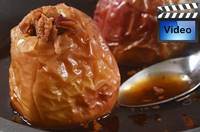
A delicious dessert made
with Apples that have their cavity filled with cinnamon brown sugar
and nuts that are baked until soft and tender.
more
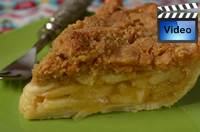
Enjoy
this delicious pie with its crumble topping, apples slices coated
with an thick apple syrup, and a buttery crisp pastry crust.
more
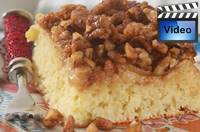
This yeast cake is wonderfully soft and
fluffy. It is topped with slices of apple, a drizzling of honey, a
layer of cinnamon brown sugar, and toasted pecans.
more
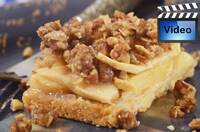
A three layer bar that combines a buttery
crisp shortbread base with lightly sweetened apple slices topped
with a crisp and
crunchy streusel. more
Walk
into almost any grocery store in America, anytime of the year, and you
will find the same varieties of easily recognizable and perfectly shaped
apples. Mostly notably are the Red Delicious, the yellow green
Golden Delicious and the green Granny Smith. If you are lucky you
may find a few other varieties (red and green McIntosh, red and yellow
Gala, Braeburn, Fuji, and the red Rome) especially during the Fall harvest time. This is surprising when you think that there are over 7,000 named
varieties of apples in the world. Unfortunately the
consumer seems to value perfection in their apples (perfect size, shape,
and color) over taste and the producers compound the problem by only
growing apples that are profitable (have high yields and long storage
qualities). A. J. Liebling in 'Between Meals' says of the consumer
"They have made a triumph of the Delicious apple because it doesn't
taste like an apple, and of the Golden Delicious because it doesn't
taste like anything."
It is believed that the wild crab
apple was the first fruit known to man and one of the first fruits to be
cultivated. There are many references to the apple in Greek mythology.
In fact, the ancient Greeks would call any unknown round fruit that grew
on a tree an 'apple' often distinguishing it only by its country of
origin. For example, the Greeks called citrus fruits "Persian
apples" and apricots "Armenian apples". Many times the term
"golden apples" was used and it is now thought the Greeks were probably
referring to lemons or oranges. It wasn't until the 17th century that
permanent names began to stick to certain fruits.
Apples were brought
to the New World by the Pilgrims in 1620. The beginning of
the westward cultivation of apple trees is credited to the now famous
Johnny Appleseed, although not by him simply tossing around apple seeds
as legend has it. Johnny Appleseed was born John Chapman in
Leominster Massachusetts in 1774.
Around 1800, starting in
Pennsylvania and moving westward to Indiana, he established nurseries
and planted apple trees everywhere he went until his death in 1845.
At about the same time, 1824, Captain Aemilius Simpson planted the first
apple seeds in the Northwest (Washington) which is the now the top apple
producer in the United States.
Apples come in so
many colors, shapes, and sizes. Their flavor can range from crisp
and sour to soft and sweet. The beauty of the apple is that its
taste will change from year to year depending on the growing conditions. In fact, flavor can vary from apple tree to apple tree and even from
orchard to orchard. So whenever possible
buy your apples from a local orchard or farmer's market and remember
what Horace once said "Whatever variety of apple you eat, to get the best
make sure to buy only those picked by the light of the waning moon".
Sources:
Andrews, Tamra, Nectar and Ambrosia: An Encyclopedia of Food in World
Mythology. Santa Barbara: ABC-CLIO, Inc., 2000.
Behr,
Edward. The Artful Eater. New York: The Atlantic Monthly Press, 1992.
Davidson, Alan
and Knox, Charlotte. Fruit. New York: Simon & Schuster, 1991.
Davidson, Alan.
The Oxford Companion to Food. Oxford: Oxford University Press,
1999.
Grigson,
Jane.
Fruit Book. London: Penguin Books, 1982.
Harrison, S.G.,
Masefield, G.B., and Wallis, M. The Oxford Book of Food Plants.
London: Oxford University Press, 1969.
Liebling, A.J. Between Meals An Appetite for Paris, New York: Farrar,
Straus and Giroux, 1959.
Marian, John F.
The Dictionary of American Food & Drink, New Haven and New York:
Ticknor & Fields, 1983.
Root, Waverley, Food. New York: A Fireside
Book, 1980.
Whiteman, Kate.
The New Guide to Fruit. New York: Lorenz Books, 1999.
Use of materials on
all pages on the domains Joyofbaking.com,
the Joyofbaking.com Facebook
Page, the
Joyofbaking1 YouTube
Channel and any emails sent from @joyofbaking.com
are
entirely at the risk of the user and their owner, iFood Media LLC
will not be responsible for any damages directly or indirectly resulting
from the use.
References
cited may include a link to purchase the referenced book or item on Amazon.com.
Joyofbaking.com receives a commission on any purchases resulting from these
links.
This
website and the contents are not endorsed or sponsored by the owner of the
"Joy of Cooking" series of books or its publisher Simon & Schuster, Inc.
and is not related to the "Joy the Baker" books and website.
Video icons by Asher.
Content in any form may
not be copied or used without written permission of Stephanie Jaworski,
Joyofbaking.com. Students and non profit educators may use content without
permission with proper credit.