Page loading ... Please wait.
 
Baking & Dessert Recipes & Photos
 
Web Joyofbaking.com


About Us

Substitutions

Ingredients

Glossary

Conversions


Home

Recipe Index

New Recipes

Breakfast & Brunch

Bars & Squares

Cakes

Cookies

Comfort Foods

Pies & Tarts

Biscotti

Quick Breads

Muffins

Scones

Shortbreads

English Tea Party

Trifles

Apple Recipes

Lemon Recipes

Strawberry Recipes

Christmas Baking

Christmas Candy

Christmas Cookies

Valentine's Day Desserts

Thanksgiving Baking

Easter Baking

Ice Creams & Ices

Baking History

Bibliography

Biscotti Recipes

Scroll Down For More Recipes

Click Picture For Link to the Above Featured Recipe

The Italians use the term biscotti to refer to any type of cookie. In North America, biscotti is used to describe a long, dry, hard twice-baked cookie with a curved top and flat bottom designed for dunking into wine or coffee. The name biscotti is derived from 'bis' meaning twice in Italian and 'cotto' meaning baked or cooked.

Biscotti is said to have originated during Columbus's time and credited to an Italian baker who originally served them with Tuscan wines. They became so popular that every province developed their own flavored version. Because of their long storage ability they were an ideal food for sailors, soldiers, and fisherman.

Most European countries have adopted their own version of biscotti: English - rusks, French - biscotte and croquets de carcassonne, Germans - zwieback, Greeks - biskota and paxemadia, Jewish - mandelbrot, and Russians - sukhariki. continued below

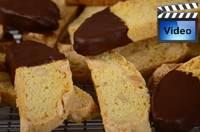
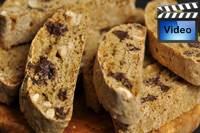
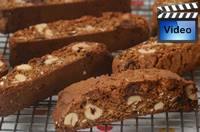
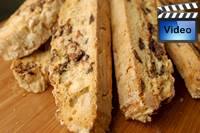
 Almond Biscotti

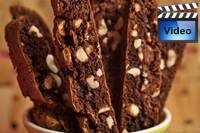
Chocolate Almond Biscotti

Chocolate Hazelnut Biscotti

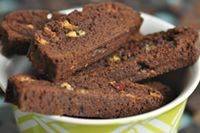
Chocolate Biscotti with Cranberries

Cappuccino Biscotti

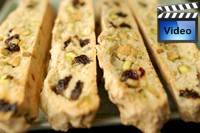
Cranberry Pistachio Biscotti

Continued from above.

Traditionally biscotti were almond flavored as almonds were readily available in Italy and nearby countries. Now your imagination is the only limiting factor to what can be added to these popular cookies; dried fruits, chocolate, different varieties of nuts, seeds, spices, etc. Frequently found iced with melted chocolate or frostings, and topped with nuts and even colored sprinkles.

The sticky dough is first shaped into a 12 inch (30cm) log and baked until firm. After a short cooling period, the log is sliced into diagonal slices and baked again to draw out the moisture thus producing a crisp, dry textured cookie that has a long shelf life. Recipes containing butter or oil will have a softer texture and will not keep as long as the traditional recipes that only use eggs to bind the ingredients together.


s


Save This Page to del.icio.us


A baking resource on the Internet since 1997

Contact Us   Privacy Policy

All content on this site is either original or has been significantly modified and changed from its credited original source.  Use of materials on Joyofbaking.com is entirely at the risk of the user and Joyofbaking.com or Stephanie Jaworski will not be responsible for any damages directly or indirectly resulting from the use.

This website and the contents thereof are not endorsed or sponsored by the owner of the "Joy of Cooking" series of books or its publisher Simon & Schuster, Inc.

Content in any form may not be copied or used without written permission of Stephanie Jaworski, Joyofbaking.com.  Students and non profit educators may use content without permission with proper credit. 

Copyright  1997 to 2008 Stephanie Jaworski