There is nothing
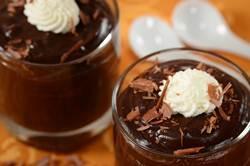
more satisfying than a really good homemade Chocolate Pudding, one with a
velvety smooth texture and deep chocolate flavor. I love everything about it and
if you have always settled for commercially made puddings, than you are in for a treat. This homemade
chocolate pudding is quite easy to prepare and what makes it so perfect is that most of the ingredients you will already have in your cupboards. Things
like milk, cream, sugar, eggs, cocoa powder, and chocolate. And while some may
think of puddings as old fashioned, when you serve this dessert in pretty bowls
with a large dollop of whipped cream,
there is no better way to end a meal.
This chocolate pudding could be called a
"double" chocolate pudding, as it gets its deep chocolate flavor from both
unsweetened cocoa powder (regular or Dutch-processed) and semisweet (or
bittersweet) chocolate. When you make a chocolate pudding what you are
really doing is making a 'cooked' custard that contains cornstarch (corn flour) to make it thick enough to eat with a spoon. The danger zone
with any pudding is cooking it over too high a heat causing lumps or even worse,
scorching. To avoid these pitfalls use a heavy bottomed saucepan and cook
it over medium low heat, stirring constantly with a large heatproof rubber
spatula. Make sure when stirring you reach the bottom, sides and corners
of the saucepan to prevent the pudding from sticking and scorching. As you
cook the pudding it may look lumpy but if you stir quickly the lumps should
smooth out. Once the pudding has become thick, like mayonnaise, remove
immediately from the heat. Straining the pudding will help get rid of any lumps that may have formed. Once you have added the chopped chocolate, vanilla and butter avoid over mixing the
ingredients as the pudding is quite fragile at this stage. If you like
your chocolate pudding warm, then by all means eat it right away. But if
you like your pudding cold, simply press plastic wrap
onto the surface of the puddings and refrigerate until firm (a couple of hours). For those who like a skin (film) on the top of their pudding, let the pudding cool
uncovered and then cover with plastic wrap and refrigerate.
Note: You can make this chocolate pudding without the
egg yolks. No other adjustments have to be made to the recipe. It may,
however, take the full five minutes of cooking on the stovetop to reach
the correct consistency. While leaving out the egg yolks doesn't really
affect the flavor of the pudding, I find the texture not as silky smooth.
Chocolate
Pudding: In a medium-sized heatproof bowl whisk together the sugar, cornstarch, cocoa powder, and salt. Then
whisk in 1/3 cup (80 ml/grams) of the milk to make a thick paste. Add
the egg yolks and whisk into the cocoa paste mixture. Set aside while you heat the milk and cream. Have
ready a strainer placed over a bowl as you will need to
strain the pudding after it is cooked.
First, rinse a medium-sized
heavy saucepan
with cold water and then shake out the excess water. Doing this step helps to prevent
the milk from scorching. Then pour in the remaining 1 1/3 cups (320 ml/grams) milk with the cream. Bring this
mixture just to a boil (the milk will start to foam up) and then remove from heat. Gradually pour the
hot milk into the egg mixture, whisking constantly, until the mixture is smooth. Transfer the pudding mixture to a
heavy bottomed medium sized saucepan and place over medium-low
heat. Cook, stirring constantly, until the mixture thickens to the
consistency of mayonnaise (about 3 - 5 minutes). Remove from heat and pour
through the strainer to remove any lumps that may have formed during cooking.
Add the finely chopped
chocolate, vanilla extract, and butter, stirring gently with a rubber
spatula until the mixture is smooth. Pour into 6 bowls or glasses. Can serve warm or if chilling, press plastic wrap onto the surface of the warm
puddings to prevent a skin (film) from forming. If you like a layer of
skin (film) on your pudding, simply leave the puddings uncovered until cooled and then
cover with plastic wrap. Can be covered and stored in the refrigerator for a
couple of days. Serve warm, at room temperature, or cold. Serve with a large dollop of softly whipped cream.
Use of materials on
all pages on the domains Joyofbaking.com,
the Joyofbaking.com Facebook
Page, the
Joyofbaking1 YouTube
Channel and any emails sent from @joyofbaking.com
are
entirely at the risk of the user and their owner, iFood Media LLC
will not be responsible for any damages directly or indirectly resulting
from the use.
References
cited may include a link to purchase the referenced book or item on Amazon.com.
Joyofbaking.com receives a commission on any purchases resulting from these
links.
This
website and the contents are not endorsed or sponsored by the owner of the
"Joy of Cooking" series of books or its publisher Simon & Schuster, Inc.
and is not related to the "Joy the Baker" books and website.
Video icons by Asher.
Content in any form may
not be copied or used without written permission of Stephanie Jaworski,
Joyofbaking.com. Students and non profit educators may use content without
permission with proper credit.