|
There are
excellent foreign and domestic brands of chocolate
on the
market today. Each manufacturer produces a chocolate with its own
unique texture and flavor using a special formula
involving a certain type and/or mix of beans, processing technique, and
ingredients.
What chocolate you buy and use should be dependent on flavor but also on what
you are making. For example,
in making an American style layer cake where there are so many other competing
flavors, cheaper brands found in grocery stores (Baker's, Hershey's, or
Ghirardelli) are adequate. The more expensive American brand (Scharffen
Berger) or European brands (Lindt, Callebaut, Valrhona, Cacao Barry)
have such depth and nuances of flavor that are better showcased in
desserts where there are less ingredients that won't diminish or mask
their fine taste.
The
best way to choose the brand of chocolate to use in both your baking and eating is
to buy a few brands and taste them using the following factors to rate the
different chocolates. (Remember that the flavor of the chocolate does not
change when its melted, so make sure you like the taste of the
chocolate when eaten out-of-hand.)
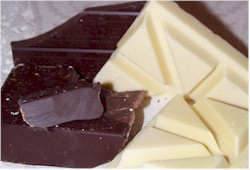
Appearance - the
chocolate should have a smooth, even, and glossy unblemished appearance.
The surface should not be dull or have grayish-white streaks and dots (called chocolate bloom or fat bloom). Bloom is when the cocoa butter
has separated causing it to rise to the surface of the chocolate. This happens when the chocolate is stored in too
humid or too warm a temperature. The chocolate can still be used as it
only minimally affects the taste and texture.
Aroma - the
chocolate should have a rich chocolately smell with no chemical or musty scent.
Smell the chocolate as it has a tendency to pick up odors of other foods if it
is not wrapped and
stored properly.
Snap - the
chocolate should break with a 'snap', that is, firmly and cleanly. It
should not crumble, bend, or splinter.
Texture - the
chocolate should have a smooth and velvety texture, not grainy or overly greasy
on the palate. It should melt almost immediately in your mouth.
Flavor - the main
flavor should be the chocolate, not the other ingredients (vanilla, nuts,
spices) and it should have a rich, well-balanced, pleasing flavor. It
should not be too sweet or too bitter.
Aftertaste - the
chocolate should leave a pleasant chocolate flavor (not burnt) in your mouth.
STORING: Chocolate should be stored in a cool (60 - 70 degrees
F) (15 - 21 degrees C), dry (less than 50% humidity), and odor-free environment
away from direct heat and sunlight.
If stored properly, dark
chocolate and cocoa will last for years. White and milk chocolate can only
be stored for about 10 months because of the milk solids they contain.
When chocolate is not stored properly grayish-white streaks will appear on the
surface of the chocolate, called bloom (see above).
|