|
Orange Chiffon Cake: Separate the eggs
while they are still cold. Place
the egg yolks in one bowl and the whites (along with the extra egg white) in another. Cover with plastic wrap
and bring to room temperature (about 30 to 60 minutes).
Preheat your oven to 325 degrees F
(165 degrees C) and have ready a 10 inch (25 cm) two piece
ungreased tube pan. (Don't use a non stick pan).
In the bowl of your
electric stand mixer, fitted with the paddle attachment, (or
with a hand mixer) place the flour,
1 cup (200 grams) sugar (Sugar 1), baking powder, salt, and orange zest. Beat until combined.
Make a well in the center of the flour mixture and add the egg yolks, oil,
orange juice, and vanilla extract. Beat on medium speed until smooth (about one minute). Scrape down the sides
and bottom of the bowl as
needed.
In another clean bowl of your
electric stand mixer,
fitted with
the whisk attachment (or with a hand mixer), beat the egg whites and cream of
tartar, on medium low speed, until soft peaks form. Increase your mixer
speed to high and gradually beat in the remaining 1/2 cup (100 grams) of sugar (Sugar 2) and
continue to beat until stiff peaks form. With a large rubber spatula or wire whisk, gently fold the egg whites (in three
additions) into the
egg yolk batter just until blended (being careful not to deflate the batter).
Pour the batter into the
tube pan and bake for about 55 to 60 minutes, or until a wooden
skewer inserted into the center of the cake comes out clean. (When lightly
pressed, the cake will spring back). Immediately upon removing the cake
from the oven invert (turn upside down) the pan and place on a bottle or flat surface so it is
suspended over the counter. Let the cake cool completely before removing
from pan (about 1 1/2 hours).
To remove the cake from the
pan, run a long metal spatula around the inside of the tube pan and center
core. Invert onto a greased wire rack.
Glaze: Place the sifted
powdered sugar in a bowl. Add the rest of the ingredients and stir until you
have a thick and smooth glaze of pouring consistency. Add more orange juice or powdered sugar, as
needed. Pour the frosting over the top of the cake, allowing it to drip down the
sides. Let the frosting dry before covering and storing. Serve with softly
whipped cream and fresh fruit.
Store in an airtight container
for a few days at room temperature or for about a week in the refrigerator. This
cake can also be frozen for a couple of months.
Serves about 12 people.
View comments on this recipe on YouTube |
|
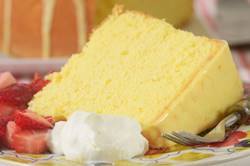
Orange Chiffon Cake:
2 cups (240 grams)
cake
flour
1
cup (200 grams) granulated white sugar (Sugar 1)
2
teaspoons (8 grams)
baking powder
1/2 teaspoon
(2 grams) salt
2 tablespoons orange
zest (from about 2 large oranges)
7 large egg yolks (120
grams), at room temperature
1/2 cup (120 ml/grams) vegetable,
corn, canola, or safflower oil
1/2
cup (120 ml/grams)freshly squeezed orange juice (2 - 3 large
oranges)
1 teaspoon
(4 grams) pure vanilla extract
8 large egg whites (240
grams), at room temperature
1/2
teaspoon (2 grams) cream of tartar
1/2 cup (100 grams) granulated white sugar (Sugar 2)
Orange
Glaze: (optional)
2 cups (240 grams)
confectioners sugar (powdered or icing), sifted
1 tablespoon orange zest
4-5 tablespoons orange juice
1 teaspoon lemon juice
1 tablespoon (13 grams)
melted butter
|















.%20It%20is%20the%20oil%20that%20gives%20this%20cake%20its%20wonderful%20moist%20and%20tender%20crumb%20and%20that%20keeps%20the%20cake%20soft%20even%20when%20refrigerated.%20From%20Joyofbaking.com%20With%20Demo%20Video)