|
The peach belongs to the Rose family (Prunus)
and is classified as a stone fruit
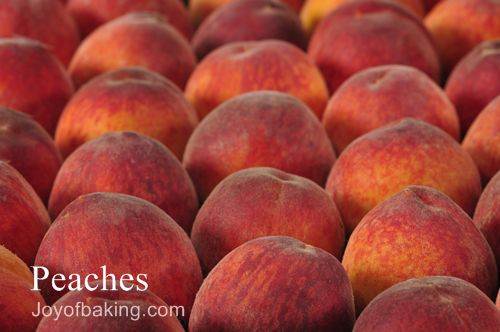
or drupe. An aromatic sweet and juicy medium-sized round fruit with a
downy thin skin, the peach ranges in color from a red-blushed yellow gold to a
pink-blushed creamy white (depends on the variety). A succulent orange,
yellow or white flesh surrounds a hard central wrinkled stone or pit that is
sometimes cracked open to reveal the seed or kernel.
Peaches are
divided into two classifications: 'Clingstone'
and 'Freestone', with many varieties within each classification. The names
(Clingstone and Freestone) refer to how easily the flesh of the peach separates
from the stone. The Clingstone is exactly that - the flesh clings
stubbornly to the central stone or pit. On the other hand, the Freestone's
flesh is easily separated from the stone. The Clingstone has a firmer,
drier pulp and is widely used commercially for canning and preserves.
Because Clingstones are the first available peach of the season (May-June) you
may find them in grocery stores. Freestone peaches, however, are the ones
most often found in grocery stores during the summer months. Their
flesh is juicy, sweet and flavorful which makes them ideal for baking and
cooking.
When choosing
peaches look for fragrant, smooth, firm and brightly-colored fruit that gives
slightly to gentle palm pressure. Avoid hard wrinkled peaches or ones with
soft spots, blemishes or green tinges (a sign that the fruit was picked too
early). The amount of red blush on a peach is a sign of its variety, not
its ripeness. Peaches will not ripen or become sweeter after they are
picked but they will soften and become juicier in a day or two if left at room
temperature. To quicken the softening of the fruit, place in a pierced
paper bag with an apple or banana. The ethylene gas given off by these
fruits hastens the softening process. Once soft, and if not used
immediately, store in the refrigerator in a plastic bag for a few days.
Bring cold peaches to room temperature before using to bring out their full
flavor.
Unfortunately, when you buy firm peaches it
is hard to know what you are getting. Bruises and/or brown rot are usually
undetectable when buying the fruit, and only become apparent once they soften.
Bruises can be caused during shipping and handling, and brown rot is the result
of a rainy growing season. The texture of the flesh is unknown also when buying
peaches and quality can be irregular, even within the same shipment. A wooly or
mealy - textured flesh can be the result of keeping the fruit in cold storage
too long or else harvesting the fruit too late. Follow the above guidelines for
choosing peaches and buy from a reputable supplier.
To remove the skin of the peach,
first make an 'X' in the base of the peach with a sharp knife so you can test
for looseness of the skin before peeling. Then drop the peach into a pot of
boiling water for 20-30 seconds. Remove from the water with a slotted spoon and
immediately plunge the peach into ice water. Cut the peach in half so it
doesn't slip and then peel the skin away from the flesh using a sharp knife.
Cut or peeled peaches discolor rapidly when exposed to air, so if not using
right away, drizzle or toss with a small amount of lemon juice, wine or liqueur
to retard browning.
Peaches
originated in China but are now grown in temperate climates throughout the
world. The peach tree is delicate and prone to disease and cannot tolerate
extremes in temperature. The peach came to Europe through Persia and is
sometimes known by its Latin name 'Persian Plum'.
|
|
YIELD -
1 pound (454 grams) =
3-4 medium peaches = 2-3 cups sliced or chopped
FACTS:
- Peaches are at their
best when just ripe and at room temperature.
- New hybrid was
developed to reduce the fuzziness so now the skin is just downy soft.
- Could not develop a
fuzz-less peach so a machine was invented to gently rub off the
remaining fuzz. Since then sales of peaches have shot up.
- Peaches do not ripen
after picking, only soften.
- Peach trees only
survive about 20 years.
- Most of the vitamins
of the peach are in the skin.
- White peaches,
although not commonly available, are said to be superior in flavor.
- The red 'blush' on a
peach is due the variety and is not a sign of ripeness.
- When baking with
peaches remove the skin (peel) first, as the skin becomes tough when
cooked.
- Peach kernels are
used in making liqueurs and found in marzipan, peach jams and jellies.
- Closely related to
the nectarine.
- Try placing a peach
slice in a glass of white wine.
- Chinese believe the
peach is a symbol of immortality.
Note: If you live
in Canada, my personal preference is the Ontario Peach. If you
live in the States, my preference is the peaches of Georgia and the
Carolinas.
|