ugalach
(also spelled Rugelach or Ruglach) is a Eastern European cookie made with a
cream cheese flavored dough that is cut into triangles and rolled
around a filling to form a crescent shape. There are many fillings used to
fill Rugalach, with popular choices being ground chocolate,
poppy seeds, dried fruits and/or nuts. For this Rugalach recipe we
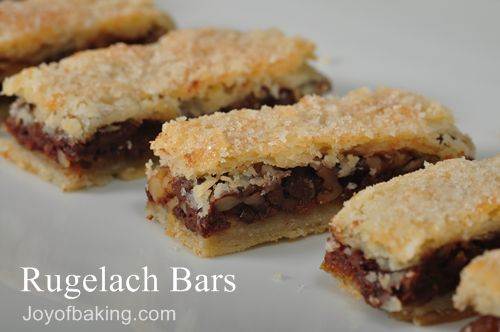
are not going to make cookies. Instead it makes a large pan of squares
which is great for large gatherings or to take to a bake sale. This recipe
comes from Martha Stewart's Holiday Cookie
Magazine and they taste wonderful, just like Rugalach should,
only much less work.
Rugalach dough is different
from a regular dough in that it contains cream cheese which adds a nice
tanginess and also makes it very easy to work with. Once the dough is made
it is divided in half, chilled, and then rolled into two rectangles. One
rectangle is placed in your pan and then the filling is layered over the
dough. The filling contains ground chocolate, nuts
(pecans or walnuts), chopped dried apricots, orange zest, and a hint of ground cinnamon.
Once the filling is placed in the pan, we then place the second rectangle of dough on top of the filling.
When these
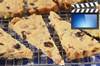
gems come out of the oven, you have a buttery crisp pastry enclosing a
delicious filling. Rugalach has always been a popular holiday treat but
you will not want to limit these bars to only once a year.
Cream
Cheese Dough: Place the cold butter and cream cheese in the bowl of your
electric mixer. Mix on low speed until the cream cheese is broken down but the
butter is still chunky. Add the flour and salt and, on low speed, beat until
crumbly and just beginning to hold together. (There should still be some small
pieces of butter visible in the dough.) Divide the dough into two equal pieces.
Flatten each piece of dough into a rectangle and wrap in plastic. Chill in the
refrigerator several hours or overnight.
Next day make the
chocolate filling.
Chocolate
Filling: Preheat oven to 350 degrees F (177
degrees C) and place the rack in the center of the oven. Place
the walnuts or pecans on a baking sheet and bake for about 8 - 10 minutes or
until lightly browned and fragrant. Remove from oven, cool, and then finely chop. Set aside.
In the bowl of
your food processor, pulse the chopped chocolate until very finely chopped.
Transfer to a large bowl and stir in the chopped nuts, sugar, ground cinnamon,
dried apricots, orange zest, corn syrup and melted butter. Set aside.
Have ready a 9 x
13 x 2 inch (23 x 33 x 5 cm) baking pan that has been lined with parchment
paper.
Remove one
rectangle of the dough from the refrigerator and, between two 9 x 13 inch (23 x
33 cm) pieces of waxed paper or parchment paper, roll the dough into a
rectangle that is the size of your baking pan. Line your pan with the rolled out
dough, trimming as needed. Spread the chocolate filling over the
dough. Remove the second dough from the refrigerator and roll it out the same
as the first. Place the rolled out dough on top of the chocolate filling,
trimming the edges as needed.
Mix the egg yolk
and water together in a small bowl, and brush the top of the bars with the
glaze. Sprinkle with sugar. Bake in a 350 degree F (177 degree C) oven for about
35 minutes or until golden brown. Remove from oven and place on a wire rack to
cool. Cut into 1 x 3 inch long bars (2.5 x 7.5 cm).
Makes about 39 - 1
x 3 inch bars
Source:
Stewart, Martha.
Holiday Cookies Magazine. December 2001 Issue.
Cream Cheese Dough:
12
tablespoons (1 1/2 sticks) (160 grams) cold unsalted butter, cut in 1/2
inch pieces
8 ounces
(227 grams) cream cheese
2 cups
(280 grams) all purpose flour
1/2
teaspoon salt
Chocolate Filling:
1 cup (110
grams) walnuts or pecans
6 ounces
(170 grams) semisweet chocolate, cut into pieces
1/2 cup
(100 grams) granulated white sugar
1 1/2
teaspoons ground cinnamon
3/4 cup
dried apricots, finely chopped
Grated
zest of one orange
3
tablespoons light corn syrup
3
tablespoons (42 grams) unsalted butter, melted
Glaze:
1 large
egg yolk
1
tablespoon water
Garnish:
3
tablespoons (40 grams) granulated white sugar or sanding sugar
All content on this site is
either original or has been significantly modified and changed from its
credited original source. Use of materials on Joyofbaking.com is
entirely at the risk of the user and Joyofbaking.com or Stephanie Jaworski
will not be responsible for any damages directly or indirectly resulting
from the use.
This
website and the contents thereof are not endorsed or sponsored by the owner
of the "Joy of Cooking" series of books or its publisher Simon & Schuster,
Inc.
Content in any form may
not be copied or used without written permission of Stephanie Jaworski,
Joyofbaking.com. Students and non profit educators may use content without
permission with proper credit.