emony
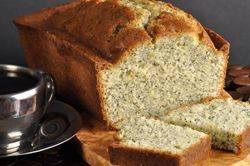
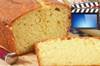
and buttery is how I would describe this delicious bread. It is like a pound
cake in taste and texture but with the added bonus of a sugary lemon glaze that
you brush on the bread as soon as it comes out of the oven. This glaze gives the
bread a nice citrus flavor and it also makes it tender and moist so it will keep
for days. This recipe is from Rose Levy Beranbaum's excellent 'Cake Bible'.
This recipe uses a slightly different method to mix the batter. Instead of
the more common 'creaming' method where the butter and sugar are creamed
together first and then the eggs, followed by the flour and milk are
added, this recipe uses the 'one bowl' or 'quick method'. This is where
all the dry ingredients are first put into a mixing bowl and then room
temperature butter, along with a little of the wet ingredients, are added.
These ingredients are beaten together and then the remaining wet
ingredients are added. The reason for mixing the batter in this way is to
reduce the gluten formation in the flour. This can only happen if the
butter has had the chance to coat the flour before all the wet ingredients
are added which has a toughening affect. This method makes a cake with a
moist, dense, and velvety texture. The only downside to this method is
that you will notice that the cake does not have quite the volume of cakes
that are made with the creaming method.
Another addition to this tea bread is black poppy seeds. They look
lovely dotting this bread and add a delightful crunch. Poppy seeds are the
kidney-shaped, tiny ripe black seeds of the opium poppy plant and Tom
Stobbart in his 'The Cook's Encyclopedia' describes their flavor as
"pleasantly nutty, a little like sesame seeds, and perhaps rather nicer".
Although around the world they are used in both sweet and savory dishes,
here in North America poppy seeds are used mainly in cakes, cookies, and
breads.
Preheat oven to
350 degrees F (180 degrees C) and place the oven rack in the center of the
oven. Butter
and flour (or spray with a non stick vegetable/flour spray) the bottom and sides
of a loaf pan (8 x 4 x 2 1/2 inch) (20 x 10 x 7 cm). Line the bottom of the
pan with parchment paper and butter and flour the paper. Set aside.
In a separate bowl, whisk
together the eggs, vanilla extract, and milk. Set aside.
In the bowl of your electric mixer,
or with a hand mixer, beat the flour, sugar, baking powder, salt, lemon zest,
and poppy seeds until combined. Add the softened butter and half the egg mixture
and mix on low speed until moistened. Increase the speed to medium and beat for
about one minute. This aerates and develops the cake's structure. Scrape down
the sides of the bowl and add the remaining egg mixture in two batches, beating
about 30 seconds after each addition. This will strengthen the structure of the
batter.
Scrape the batter into the prepared pan and bake for about 55 to 65
minutes, or until the bread is golden brown and a toothpick inserted in the
center comes out clean. You may have to cover the bread with buttered foil after
about 30 minutes if you find the bread over browning.
Meanwhile, in a
small saucepan, bring the sugar and
lemon juice to a boil, stirring until the sugar dissolves.
When the bread is
done, remove from oven and
place on a wire rack. Pierce the hot loaf all over with a wooden skewer or
toothpick and then brush the top of the loaf with about half the hot lemon syrup. Cool the
loaf in the pan for about 10 minutes then invert onto a greased wire rack. Brush
the remaining syrup onto the bottom and the sides of the loaf. Reinvert the
bread so it is right side up and then cool the bread completely before wrapping.
Store at least overnight before serving to allow the lemon syrup to distribute
throughout the loaf.
Makes 1
loaf.
Sources:
Beranbaum, Rose
Levy. 'The Cake Bible'. William Morrow & Company, Inc. New York: 1988.
Bloom, Carole.
The International Dictionary of Desserts, Pastries and Confections. Hearst
Books. New York: 1995.
Stobbart, Tom.
The Cook's Encyclopedia. Harper & Row Publishers. New York: 1980.
All content on this site is
either original or has been significantly modified and changed from its
credited original source. Use of materials on Joyofbaking.com is
entirely at the risk of the user and Joyofbaking.com or Stephanie Jaworski
will not be responsible for any damages directly or indirectly resulting
from the use.
This
website and the contents thereof are not endorsed or sponsored by the owner
of the "Joy of Cooking" series of books or its publisher Simon & Schuster,
Inc.
Content in any form may
not be copied or used without written permission of Stephanie Jaworski,
Joyofbaking.com. Students and non profit educators may use content without
permission with proper credit.