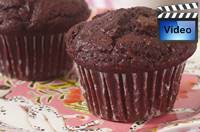
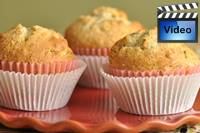
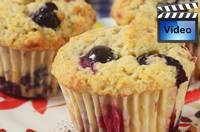
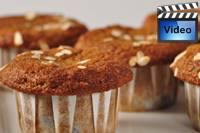
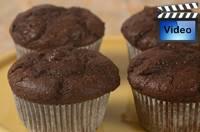
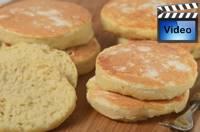
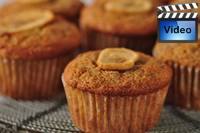
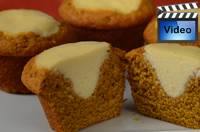
The
name 'Muffin' either comes from the French word
'moufflet', meaning a soft bread,
or from the German word 'muffe' which is the name for a type of
cake. Although
there are two types of muffins: English and American, all the recipes on the
site are for the American-style muffins.
What 'American-style' muffins means is that
the muffins are made, not from a yeast dough like the English Muffin,
but rather they use a chemical leavener (baking powder or baking soda).
Maybe it would be better to describe them
as a cross between a
bread and a cake. American-style muffins can be further divided into
two types: bread-like
and cake-like. Each type has its own technique for mixing the batter.
Less sugar and butter makes a bread-like muffin. A higher sugar
and butter content makes a cake-like muffin. Once you determine
which type of muffin you prefer, choosing recipes to try becomes easier. A basic muffin
batter contains flour, sugar, baking
powder/soda, eggs, a fat (liquid or solid), and milk (buttermilk, yogurt, sour cream). Often
times fruit, nuts,
chocolate, vanilla extract, spices, cornmeal, bran, oats are added to give the
muffins flavor. Sometimes a streusel topping or glaze is used
which not only adds flavor
and texture but it can transform a plain basic muffin into something special.
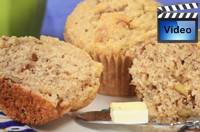
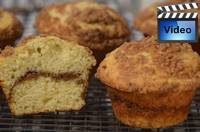
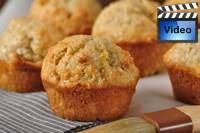
The 'perfect'
American Muffin is
symmetrical with a domed top. The surface of the muffin should be
bumpy and the volume of the batter should have almost doubled during
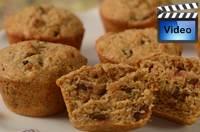
baking. The muffin should feel light for its size and when cut in
half its interior should be moist and tender with no tunnels.
American muffins can be either sweet or savory and are traditionally
served warm for breakfast. They are best eaten the day they are
made or frozen.
BATTERS
The
bread-like muffin
batter is made using the "muffin method". This batter can be assembled and
baked 'quickly', usually in 20-25 minutes. Only two bowls are needed to make
the batter. One bowl is used to mix all the dry ingredients together. The
second bowl contains all the wet ingredients. The fat used with the bread-like
muffins is usually in liquid form, either an oil or melted butter. When the
wet and dry ingredients have been mixed together separately, then they are
combined. The important step here is not to overmix the batter.
However, there is a tendency to over mix because the ratio of liquid to flour is
quite high.
But mixing too much overdevelops the gluten in the flour which will cause a
tough muffin with tunnels and a compact texture.
Only 10 to 15 strokes are needed to moisten the ingredients and the batter
should be still lumpy and you may still see a few traces of flour. Don't worry about these lumps as the batter continues to
blend as it bakes and any lumps will disappear. Note: Over mixing the muffin
batter causes it to become very stringy. This is the gluten developing in the
flour. Over mixing causes long strands of gluten to form making it hard for the
leavener to work and causes long tunnels in the baked good.
The
cake-like muffin
batter is prepared using the same method as making a cake batter. The butter
(room-temperature) and sugar are creamed together. The eggs are mixed in and
then the wet and dry ingredients are added alternately. The higher sugar and
fat content in this type of muffin act as tenderizers thereby producing a richer
cake-like muffin with a softer crumb. The increased fat content also minimizes
the development of gluten which again helps to produce a muffin with a softer
crumb.
PANS
Muffins and
cupcakes are
baked in a muffin pan or tin made of steel, aluminum or cast iron. Make sure
the pan you buy has rounded corners and seamless cups. Non-stick surfaces are
available which enables easy removal of the muffins from the pan. Each pan can
have 6-, 12- or 24- cup-shaped depressions and range from mini- to jumbo in
size. Mini muffin pans usually have 12 or 24 cup-shaped depressions. Each
little cup is about 2 inches (5 cm) in diameter and 1/2 inch (1.25 cm) deep and
holds about 2 tablespoons of batter. The regular size muffin pans have 6- or
12- cup-shaped depressions with each cup about 3 inches (7.5 cm) in diameter and
holds about 1/2 cup or 4 ounces of batter. Jumbo muffin pans have 6 cup-shaped
depressions with each cup being 4 inches (10 cm) in diameter and 2 inches (5 cm)
deep holding about 1 cup of batter each.
There are
also fluted muffin pans (also called bundt-lette pans) that come in 6- and 12-
cup sizes made from heavy cast aluminum. Each of the 6 fluted muffin cups
measures 4 inches (10 cm) wide and 2 inches (5 cm) deep and holds 8 ounces (240
ml) of batter. Each of the 12 fluted muffin cups measures 2 1/2
inches wide (6.25 cm) and 1 inch (2.54 cm) deep. They can be used to bake
both muffins and cakes when decorative individual cakes are desired.
Note:
If using a dark colored
pan, reduce the oven temperature, stated in the recipe, by 25 degrees F.
(This is because dark colored pans absorb more of the energy coming from the
oven walls so they become hotter and transmit heat faster than light colored
pans.)
Paper
or foil muffin cup liners are sometimes used to line the muffin pans. The
advantage of paper liners is not only does it make clean-up easier but they also
help to keep the muffins moist and help prevent them from drying out.
However, if you like your muffins to have a crust, do not use paper liners.
Instead, spray the muffin pan with a non stick vegetable spray.
BAKING
Muffins
should be baked in the center of a preheated oven and are done when a toothpick
inserted in the center comes out clean and the edges start to come away from the
sides of the pan, usually 20-25 minutes at a 350 - 400 degree F (175 - 205
degrees C) oven.
Spoon the
muffin batter into the muffin tin using two spoons or an ice cream scoop.
Only fill each cup 1/2 to 2/3 full. Even during this step, handle the batter as little as possible as too
much handling will cause a tough muffin. Fill any unused cups
halfway with water to prevent over browning of the muffins or warping of the pan.
Turn the pan halfway during baking for even browning.
Make sure you do not overbake muffins or they will be dry. When done, remove from
oven and place on a wire rack to cool slightly (5-10 minutes) before removing
from pan.
PROBLEM SOLVING
Muffins have tunnels and are dry:
- batter
was over mixed (too much gluten development)
- over
baked and/or oven too hot
- too much
flour and/or too little liquid
Muffins have an uneven shape
- too much
batter in each cup (fill only 1/2 to 2/3 full). Overfilling will cause muffins
to have "flying saucer" like tops.
- oven
temperature too high
Tops are brown but muffin is not
cooked through
- oven
temperature too high
- oven rack
not in center of oven
Muffin does not rise sufficiently
- oven
temperature too low
- batter
over mixed or incorrect amount of leavener
Muffins Stick to Pan
- pan was
not prepared properly.
- let
muffins sit in pan too long after removing from oven. Try placing the pan on a
wet towel for a few minutes to loosen the muffins. Run a sharp edge around the
inside of each muffin.
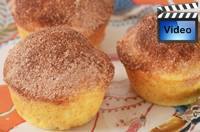
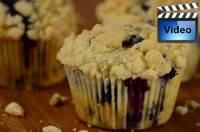
Streusel
- Comes from the German word 'streuen' which means 'to sprinkle' or 'to
scatter'. Was originally made to be used as a topping for the
German made 'Streusel Kuchen'. Streusels are now used as a
topping for cakes, coffee cakes, Danish pastries, muffins, pies, sweet
breads, and tarts.
Streusel is a
crumbly topping containing a mixture of butter, flour, and sugar.
Spices, chopped nuts, and oats can be added. This mixture is
sprinkled over the top of baked goods before they are placed in the
oven. It provides a crisp crust that adds both taste and texture
to baked goods.
Note:
Resist the temptation to add more baking powder to your muffin recipe,
thinking it will give you higher muffins. If you over leaven your
batter it will cause the muffins to over inflate when baked, which
weakens the structure and will cause the muffin to collapse. This
will result in a heavy, compact textured muffin.
General rule of thumb
is 1 to 2 teaspoons of baking powder or 1/4 teaspoon of baking soda plus
1/2 cup (120 ml) of an acidic ingredient, leavens 1 cup (140 grams) of
all purpose flour. The exact amount will vary according to the
ingredients used and how the batter is mixed.