Page loading ... Please wait.
Baking & Dessert Recipes & Pictures

breakfast & brunch bars & squares biscotti recipes shortbread recipes comfort foods healthy baking
about us
thanksgiving baking
substitutions
ingredients
glossary
conversions
christmas baking
christmas cookies
christmas candy
english tea party
quick breads
chocolate recipes
pumpkin recipes
apple recipes
cranberry recipes
blueberry recipes
lemon recipes
strawberry recipes
trifle recipes
ice cream recipes
pudding recipes
easter baking
valentine's baking
halloween baking
baking history
bibliography

Linzer Cookies Recipe

Printer Friendly Page

Linzer Cookies Recipe

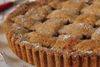
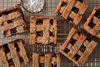
At one time we baked from recipes passed down from one generation to the next or from recipes given to us by friends and neighbors. Today we have access to recipes from around the world and are able to cross boundaries and bake desserts that were once unfamiliar to us. An example of this is the Linzertorte which is one of Austria's most famous desserts. Believed to have originated in the City of Linz, written recipes began to appear in the early 1700s. Traditionally this torte consisted of a crust made with flour, ground nuts (traditionally almonds), sugar, egg yolks, spices and lemon zest that was filled with preserves (traditionally black currant) and then topped with a lattice crust. 

Linzer Cookies use the same ingredients as the Linzertorte but present them in a different way; that is, two cookies are sandwiched together with a layer of preserves or jam. Traditionally these cookies are filled with black currant preserves but as black currant preserves are hard to find in North America we usually fill them with a variety of different flavored preserves, most notably raspberry. The top cookie, dusted with confectioners (powdered or icing) sugar, has a cutout so the preserves are visible. When cut into a round shape with a round cutout they are known as Linzer "Eyes" (Linzer Augen). Variations now exist for this cookie using ground hazelnuts, pecans, or even walnuts in place of the traditional ground almonds.

There are two types of Linzer Cookie dough; White and Brown. For the white Linzer Cookie dough, blanched almonds are used which keeps the dough white in color. For the brown Linzer Cookie dough, the nuts are toasted. To prevent the toasted nuts from turning into a paste when ground, some of the sugar from the recipe is added during processing. The sugar absorbs the oil from the nuts and prevents the nuts from turning into a paste. 

Note: Jam and preserves are similar in that they are both a cooked combination of fruit and sugar (and sometimes pectin). The difference being that preserves still contain chunks of fruit, whereas jam is more like a fruit puree. 


Linzer Cookies: Preheat the oven to 350 degrees F (177 degrees C) and place rack in the center of the oven. Toast the almonds (or pecans) on a baking sheet for about 8-10 minutes (or until lightly browned and fragrant). If using hazelnuts, toast them for 15 minutes or until fragrant and the skins begin to flake.  Remove from oven and place the hot nuts in a dish towel.  Roll up the towel and let the nuts sit (steam) for five minutes then rub the nuts in the towel briskly to remove the skins.  Once the nuts have cooled, place in a food processor and process with 1/4 cup (50 grams) of the sugar from the recipe until finely ground. Set aside.

In a separate bowl, whisk or sift together the flour, cinnamon, and salt. Set aside.

In the bowl of your electric mixer (or with a hand mixer), cream the butter and remaining sugar until light and fluffy (approximately 3 minutes). Beat in the vanilla extract, egg yolks, and lemon zest. Beat in the ground nuts. Add the flour mixture beating just until incorporated. Divide the dough in half and shape into two rectangles about 1/2 inch (1.5 cm) thick. Wrap the two rectangles of dough in plastic wrap and refrigerate until firm (at least one hour and up to several days).

Preheat oven to 350 degrees F (177 degrees C) and place rack in center of oven. Line two baking sheets with parchment paper and set aside.

Remove one rectangle of dough from the refrigerator. On a lightly floured surface roll out the dough until it is about 1/4 inch (1 cm) thick. Using a 2 to 3 inch (5 to 7.5 cm) cookie cutter (round, square, heart, etc.) cut out the dough. Place the cookies about 1 inch (2.54 cm) apart on the prepared baking sheet. Use a smaller cookie cutter (3/4 - 1 inch (2.54 cm)) to cut out the centers of half of the cookies on the baking sheet. (You will be sandwiching two cookies together and there will be a small 'window or cut out' in the top cookie so you can see the jam underneath.)

Reroll any scraps and cut out the cookies. Remove the other half of the dough from the refrigerator and roll and cut out the rest of the cookies. Bake the cookies for 12-14 minutes or until they are very lightly browned. Remove from oven and place on a wire rack to cool.

While the cookies are cooling place the raspberry jam in a small saucepan and heat gently until it has thickened slightly. Strain if there are any lumps in the jam. Let cool.

To Assemble Cookies:  Place the cookies with the cut-outs on a wire rack and lightly dust the tops with the confectioners' (powdered or icing) sugar.

On the bottom surface of the full cookie (top of cookie will face out) spread with about a 1/4 - 1/2 teaspoon of jam.  Place the cut-out cookie on top and gently sandwich them together, making sure not to smug the confectioners' sugar.  Using a small spoon, fill the cut-out with a little more jam.

Note: You can store the unassembled cookies in the refrigerator for several days in an airtight container. It is best, though, to assemble the cookies the same day as serving in order to keep the cookies crisp..

Makes about 20 - 2 inch (5 cm) sandwiched cookies.

Recipe:

1 cup (110 grams) blanched or sliced almonds, toasted and ground (hazelnuts, or pecans can also be used)

2 cups (280 grams) all purpose flour

1/2 teaspoon cinnamon

1/4 teaspoon salt

1 cup (227 grams) (2 sticks) unsalted butter, room temperature

2/3 cup (135 grams) granulated white sugar, divided

1 teaspoon pure vanilla extract

2 large egg yolks

Zest of 1 lemon

Confectioners' (Icing or Powdered) Sugar for dusting

1/2 cup seedless Raspberry or Black Currant Preserves or Jam (can use other flavored preserves or jam)

Note:  Lemon Zest is the yellow outer rind of the lemon that contains the fruit's flavor and perfume.  Can be removed with a citrus zester or grater.  When removing the outer rind (zest) do not remove the white pith, which is very bitter and inedible.


Sources
 

Beranbaum, Rose Levy. Rose's Christmas Cookies. New York: William Morrow and Company, Inc., 1990.

Friberg, Bo. The Professional Pastry Chef (Third Edition). New York: Van Nostrand Reinhold, 1996.

Malgieri, Nick. Cookies Unlimited. New York: Harper Collins Publishers, 2000.

Rodgers, Rick. Kaffeehaus. New York: Clarkson Potter/Publishers, 2002.


Join Our New & Featured Recipes Email List

New Recipes


Top 40 Recipes of the Last Year*

*Top 40 Recipes based on actual site traffic from October 1, 2008  to September 30, 2009.


Contact Us   Privacy Policy Follow Joyofbaking On Twitter

Arabic Mandarin Dutch French German Hindi Indonesian Italian Japanese Korean Norwegian Portuguese Russian Spanish Greek Swedish Finnish

Use of materials on Joyofbaking.com is entirely at the risk of the user and Joyofbaking.com, Stephanie Jaworski or Rick Jaworski will not be responsible for any damages directly or indirectly resulting from the use.

This website and the contents are not endorsed or sponsored by the owner of the "Joy of Cooking" series of books or its publisher Simon & Schuster, Inc.

Content in any form may not be copied or used without written permission of Stephanie Jaworski, Joyofbaking.com.  Students and non profit educators may use content without permission with proper credit. 

A baking resource on the Internet since 1997

Copyright  1997 to 2009 Stephanie & Rick Jaworski