|
Raspberry Swirl Ice
Cream: In a saucepan, over medium-high heat, bring the
half-and-half and salt to the scalding point (the milk just begins to foam
up).
Meanwhile, in a
stainless steel (or heatproof) bowl, whisk the egg yolks and sugar until light and fluffy. You can do this with a wire whisk or a hand mixer. Gradually pour the scalding
half-and-half into the egg yolk mixture, making sure you keep
whisking constantly so the eggs don't curdle. If any lumps do
form, strain the mixture first before heating.
Place the bowl
over a saucepan of simmering water and, stirring constantly with a
wooden spoon or heatproof spatula, cook until the custard thickens enough that it coats the
back of a spoon (170 degrees F) (77 degrees C). The term 'coat a
spoon'
is a technique used mainly as a way to
test when an egg-based custard or sauce is done. A spoon, usually
wooden, is placed in the custard and, when the spoon is raised, the film
of custard on the back of the spoon will stay in place even when you
draw a line with your finger through the middle of the custard.
Immediately
remove the custard from the heat and continue to stir the custard for a
few minutes so it does not over cook. Stir in the
vanilla extract. Cover and let cool to room temperature and then refrigerate the custard until it is completely
cold (several hours but preferably overnight).
Raspberry Sauce: Thaw the unsweetened
frozen raspberries in a fine
meshed strainer placed over a large bowl. (This will take a few hours at
room temperature or you can defrost the berries in the microwave.) Once the berries have completely thawed,
force the juice from the berries by gently pressing the berries with the back of a
spoon or spatula. (All that should remain in the
strainer is the raspberry seeds.) Throw away the seeds and, to the strained juice,
stir in the granulated white sugar and the lemon juice. Taste
and add more sugar if needed. Cover and place in the refrigerator to chill. Can
be covered and stored in the refrigerator up to a week, or it can be frozen for
about six months.
Transfer the
cold custard to the chilled container of your ice cream machine and
process according to the manufacturer's instructions. Once the ice
cream is made, to create the swirled pattern, place about
one third of the ice cream in the bottom of a chilled loaf pan, and then pour
about one half of the raspberry sauce on top of it. Top the sauce with
another one third of ice cream and then the rest of the raspberry sauce.
End with the remaining ice cream. Using a skewer or knife swirl the ice
cream. Press plastic wrap on the surface of the ice cream to prevent ice
crystals from forming. Place in the freezer for
several hours or until firm.
If the ice cream becomes too hard, to soften, place in the refrigerator for about
30 minutes before serving.
Makes about 3 cups.
Preparation time 45 minutes.
View comments on this recipe on YouTube
|
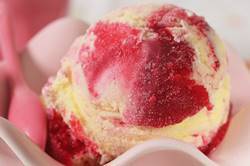
Raspberry Swirl Ice
Cream Recipe:
2 cups (480 ml/grams) half-and-half
(can also use 1 cup (240 ml/grams) each of whole milk and light cream)
pinch salt
5 large
(90 grams) egg yolks
2/3 cup (135 grams) granulated white sugar
1 1/2 teaspoons
(6 grams) pure vanilla extract or vanilla bean paste
1/2 cup (120 ml/grams) raspberry sauce (See
recipe below)
Raspberry Sauce:
1 - 10
ounce bag (300 grams) frozen
unsweetened raspberries
(can use fresh raspberries)
1/4 cup (50 grams) granulated white sugar, or to taste
1/2 teaspoon of freshly squeezed lemon
juice
|