hen a sponge cake is
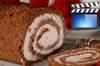
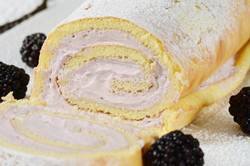
baked in a sheet pan and then rolled around a filling, it is called a Roulade
(for the French), a Jelly Roll (for the Americans), and a Swiss Roll (for the
English). Sponge Cakes
(biscuits) presented in this way have a beautiful pinwheel design and they are
often filled with toppings like lemon curd, jam or preserves, fruit sauces,
chopped nuts, ganache, or for this recipe I have used a raspberry
whipped cream. Now, all the garnish a sponge roll really needs is a
dusting of confectioners (powdered or icing) sugar, but to dress it up, as I
did, you can pipe rosettes of cream down the center of the roll and then top the
rosettes with fresh fruit.
This sponge is a light
and airy cake that contains three basic ingredients: eggs,
sugar, and flour and is leavened solely by the air beaten into the eggs. Cornstarch (corn flour)
does replace some of the flour in this recipe to produce a more tender cake
with a finer texture and crumb. (If you do not have cornstarch,
just use all cake flour.) Beating the egg yolks and egg whites separately produces
an elastic sponge cake that allows the cake to be rolled without cracking. Cracking is also prevented by rolling the sponge in a clean towel immediately
upon removing it from the oven. Once the sponge cake is filled and rolled
it can be stored in the refrigerator for a few days.
The sponge is filled with raspberry whipped cream. This is made
by first whipping heavy cream with a little vanilla extract and
sugar and then adding either raspberry puree (sauce) or raspberry
jam. If you want to use the raspberry puree I have included a
recipe. The other way, especially if you are pressed for time, is to
use store bought raspberry jam. Either way is delicious.
For Sponge Cake: Preheat oven to 450 degrees F (230
degrees C) and place oven rack in the center of the oven. Butter, or spray
with Pam, a 17 inch (43 cm) x 12 inch (30 cm) baking pan, line it with
parchment paper, and then butter and flour the parchment paper (or spray with Baker's
Joy). Set aside.
While eggs are still
cold separate two of the eggs, placing the yolks in one large mixing bowl and
the whites in another bowl. To the two yolks, add the additional yolk, and the
two remaining eggs. Cover the two bowls with plastic wrap and allow the eggs to
come to room temperature before using (about 30 minutes).
Meanwhile, in a small
bowl whisk together the sifted cake flour and cornstarch. Set aside.
Once the eggs are at
room temperature, place the egg yolks, along with 1/2 cup (100 grams) of granulated white sugar,
in your electric mixer, fitted with the paddle attachment. Beat on high speed for five minutes, or until thick,
pale yellow, and fluffy. (When you
slowly raise the beaters the batter will fall back into the bowl in slow
ribbons.) At this point beat in the vanilla extract.
Sift half the flour
mixture over the egg yolk mixture and fold in gently with a rubber spatula, just
until the flour is incorporated. Sift the remaining flour mixture into the
batter and fold in.
In a clean mixing
bowl, with the whisk attachment, beat the egg whites until foamy. Add the
cream of tartar and continue beating until soft peaks form. Sprinkle in the
remaining one tablespoon (13 grams) granulated white sugar and beat until stiff
peaks form. Gently fold a little of the whites into the batter to lighten it,
and then add the rest of the whites folding just until incorporated. Pour the
batter into the prepared pan, evenly spreading the cake batter with an offset spatula
or knife.
Bake for
about 7 minutes or
until golden brown. A toothpick inserted in the center will come out clean and
the cake, when lightly pressed, will spring back.
Immediately upon
removing the cake from the oven invert the sponge cake onto a clean dish towel
that has been sprinkled with confectioners sugar. Carefully
remove the parchment paper, sprinkle lightly with confectioners (powdered or
icing) sugar, and roll
up the sponge, with the towel, while
it is still hot and pliable. Place on a wire rack to cool.
Meanwhile for the Raspberry Puree (if using): Thaw the unsweetened
frozen raspberries in a large fine
meshed strainer suspended over a large bowl.
(This may take a few hours.) Once the berries have completely thawed,
force the juice from the berries by gently pressing the berries with the back of a large
spoon. All that should remain in the
strainer is the raspberry seeds. Throw away the raspberry seeds and, to the strained juice,
stir in the lemon juice (if using) and 1/4 cup (50 grams) of
white sugar (add more if needed).
The puree can be stored in the refrigerator for a week or frozen for
up to a year.
For Raspberry Whipped
Cream: In a large mixing bowl place the whipping cream,
vanilla extract, and sugar and
stir to combine. Cover and chill the bowl and beaters in the refrigerator for at
least 30 minutes. When chilled, beat the mixture until soft peaks form. Then add the sweetened
raspberry purée or raspberry jam, a little at a time, and
beat just until stiff peaks form when the beater is raised. Taste and
fold in more sugar or
puree, if needed.
To Assemble:
Remove about 1/2 cup of the raspberry whipped cream to use as
garnish. Then unroll the sponge, spread with the
remaining whipped cream filling, and reroll. Transfer to your
serving platter. Place the remaining whipped cream in a
pastry bag fitted with a decorative tip and pipe rosettes down the
center of the sponge. Place fresh raspberries on the rosettes,
if desired. Cover, and chill in
the refrigerator for a few hours or overnight. (You can serve this cake
immediately but chilling it for a few hours, or even overnight, sets the filling and makes it
easier to slice.) Just before serving,
dust with confectioners
(powdered or icing) sugar.
Serves 6 - 8
people.
Adapted from the Cake Bible by Rose Levy
Beranbaum
All content on this site is
either original or has been significantly modified and changed from its
credited original source. Use of materials on Joyofbaking.com is
entirely at the risk of the user and Joyofbaking.com or Stephanie Jaworski
will not be responsible for any damages directly or indirectly resulting
from the use.
This
website and the contents thereof are not endorsed or sponsored by the owner
of the "Joy of Cooking" series of books or its publisher Simon & Schuster,
Inc.
Content in any form may
not be copied or used without written permission of Stephanie Jaworski,
Joyofbaking.com. Students and non profit educators may use content without
permission with proper credit.