|
| |
Strawberry Sorbet Tested Recipe
|
Printer Friendly Page |
|
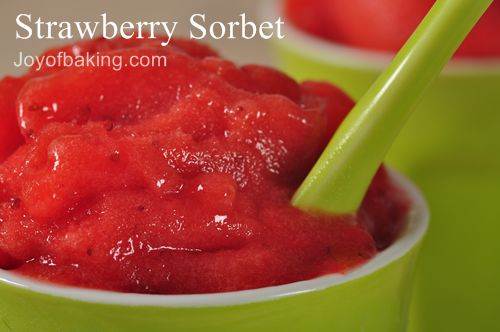
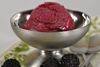
A glistening red Strawberry Sorbet is a perfect treat on a hot summer's day. It has a wonderfully light and refreshing flavor and grainy consistency that belies the fact that it is simply a frozen blend of pureed strawberries and sugar.
Sorbets became very popular in the 19th and early 20th century when they were served as a palate cleanser between courses (called Intermezzo which means "in between the work").
Sorbets, also known as ices, have a softer consistency than sherbets
(which contain milk or cream and sometimes eggs). Fruit sorbets are
wonderfully light and refreshing, with a grainy consistency, and they only
require mixing together and freezing fruit, water, sugar, and lemon juice. The water and sugar are combined to make a sugar syrup, which is chilled, and
then added to pureed fruit. To save time you may want to make a large
batch of sugar syrup and keep it on hand in the refrigerator. Either fresh
or frozen strawberries can be used in this sorbet. Unfortunately, although
the strawberries you buy at the local grocery store look beautiful, all
shiny and red, they tend to lack sweetness and flavor. If you do not have
access to a "you - pick" or farmer's market, your best bet is to use
frozen unsweetened strawberriesNote: Sugar or simple syrups are
a combination of sugar and water that is cooked over low heat until the
sugar dissolves (and liquid is clear) and then boiled for about 1
minute. The density can vary from heavy (one part sugar to one
part water), medium (one part sugar to two parts water), to light (one
part sugar to three parts water) depending on how the sugar syrup is to
be used. Sugar syrups are used to soak cakes and pastries (called
a "soaking syrup" and a flavoring can be added such as extracts, juices
or liqueurs), added to fondants to dilute them, used to poach fruit, as
a glaze, added to frostings and sorbets, and used in confectionery.
|
|
|
|
Strawberry
Sorbet: Place the sugar and water in a
small saucepan, over low heat, and stir until the sugar is completely
dissolved (about 3-5 minutes). Boil the mixture for one minute then remove from heat.
Pour the sugar syrup into a heatproof
container, and place in the refrigerator until completely chilled (about an hour
or so).
Meanwhile, thaw the
frozen strawberries and then place the thawed strawberries in a food processor and
process until the strawberries are pureed. Transfer to a large bowl, add
the lemon juice and liqueur (if using), and refrigerate until the mixture is thoroughly chilled. (If using fresh strawberries, puree the berries in the food processor, transfer
to a large bowl, add the lemon juice and liqueur (if using), and place in the refrigerator until
chilled.)
Once the simple
syrup and pureed strawberries are completely chilled, combine the simple syrup
with the pureed strawberries. Transfer the mixture to the chilled container of your ice cream machine and process
according to the manufacturer's instructions. Once made, transfer the
sorbet to a chilled container and store in the freezer.
Note: If you do
not have an ice cream machine, then pour the mixture into a 8 inch (20 cm) or 9
inch (23 cm) stainless steel pan (sorbets will freeze faster in stainless
steel), cover with plastic wrap, and place in the freezer. When the sorbet is
completely frozen (3 to 4 hours), remove from freezer and let stand at room
temperature until partially thawed. Transfer the partially thawed sorbet to the
food processor, and process to break up the large ice crystals that have formed
on the sorbet. (This step is what gives the sorbet its wonderful fluffy
texture.) Place the sorbet back into the pan and refreeze for at least three
hours, and up to several days.
Serves 4.
Preparation time 1 hour.
|
|
Strawberry Sorbet Recipe:
1/3 cup (80 ml) water
1/3 cup (65 grams) granulated white
sugar
2 1/2 cups or 1 pound (454
grams) fresh or frozen unsweetened
strawberries
1 tablespoon
lemon juice
1 tablespoon Grand Marnier or other
liqueur (optional)
Note: If you taste the sorbet
after freezing and find the amount of sugar is not right, adjust the
level of sugar by adding a little sugar syrup (too little sugar in
sorbet) or water (too much sugar in sorbet) and then refreeze the
sorbet. The sorbet is not affected by thawing and refreezing.
|
|
|
|
| |
|