In North America a "Biscuit" refers to a small quick bread
that is made with flour, a fat (butter, lard or shortening),
chemical leavening (baking
powder or baking soda), a liquid (milk or buttermilk), and sometimes eggs and a little granulated white sugar. A
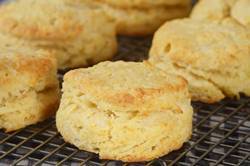
good Biscuit, in my mind, should have a golden brown crust
and when you split it in half, it should be soft, flaky
and moist enough to absorb a pat of butter.
The
American Biscuit is very similar to the British Scone. To make a good
Biscuit, the correct mixing of the ingredients is
crucial. Although you could use an electric mixer, I prefer to mix the
dough by hand using either a pastry blender or just my
fingertips. Mixing by hand helps to prevent over mixing of the
dough. To begin, the dry ingredients are
mixed together in a large bowl. Next, the butter is cut into the
flour until it looks like coarse crumbs. It is important that the butter
be
cold so when it is worked into the flour mixture it becomes
small, flour-coated crumbs, not a smooth dough. This method is similar to
how a pie pastry is made and gives the Biscuits a wonderful delicate and
flaky texture. The wet ingredients are then added to the flour mixture.
Mix the dough just until it comes together.
Biscuits need to be baked in a hot oven so the dough sets quickly thereby
producing a light Biscuit with a golden brown top and bottom with white
sides. The texture of
the interior should be light and soft, and white in color. If you want crusty Biscuits, cool them uncovered. If a softer
crust is desired, then wrap the hot Biscuits in a clean dish towel.
Biscuits are also excellent for making another American favorite, the Strawberry Shortcake.
Biscuits
Recipe: Preheat your oven to 400
degrees F (200 degrees C) and place the oven rack in the center of the oven. Line a baking sheet
with parchment paper.
In a large mixing bowl,
sift or
whisk together the flour, baking powder, salt, and sugar (if using). Cut the butter into
the dry ingredients until the mixture resembles coarse crumbs (use a pastry
blender, two knives, or fingertips). Add the milk and lightly beaten egg and
mix just until the dough comes together (the texture should be sticky, moist, and
still lumpy).
Place the
dough on a
lightly floured surface. Knead gently until it
just comes together. Roll or pat the dough to
about a 3/4
inch (2 cm) thickness. Cut out biscuits with a lightly floured 3 inch (7.5 cm) round cookie
cutter. Place on the prepared baking sheet and brush the tops with the
milk or cream. Bake for about 15 to 17 minutes or until the tops are golden
brown and a toothpick inserted in the center of a biscuit comes out clean. Remove from oven and place on a wire rack. Serve warm with butter.
Use of materials on
all pages on the domains Joyofbaking.com,
the Joyofbaking.com Facebook
Page, the
Joyofbaking1 YouTube
Channel and any emails sent from @joyofbaking.com
are
entirely at the risk of the user and their owner, iFood Media LLC
will not be responsible for any damages directly or indirectly resulting
from the use.
References
cited may include a link to purchase the referenced book or item on Amazon.com.
Joyofbaking.com receives a commission on any purchases resulting from these
links.
This
website and the contents are not endorsed or sponsored by the owner of the
"Joy of Cooking" series of books or its publisher Simon & Schuster, Inc.
and is not related to the "Joy the Baker" books and website.
Video icons by Asher.
Content in any form may
not be copied or used without written permission of Stephanie Jaworski,
Joyofbaking.com. Students and non profit educators may use content without
permission with proper credit.